
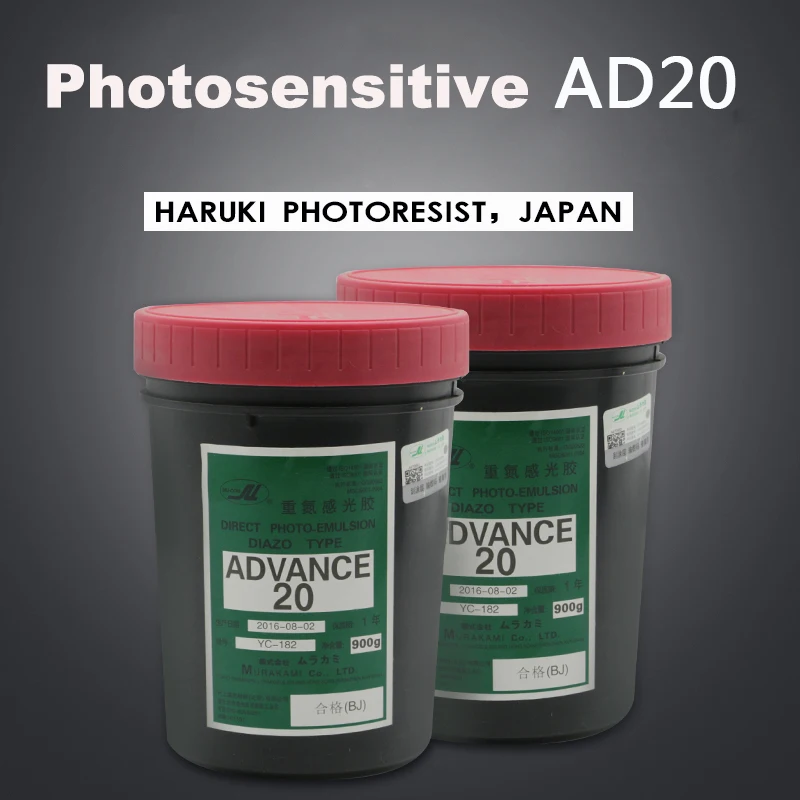
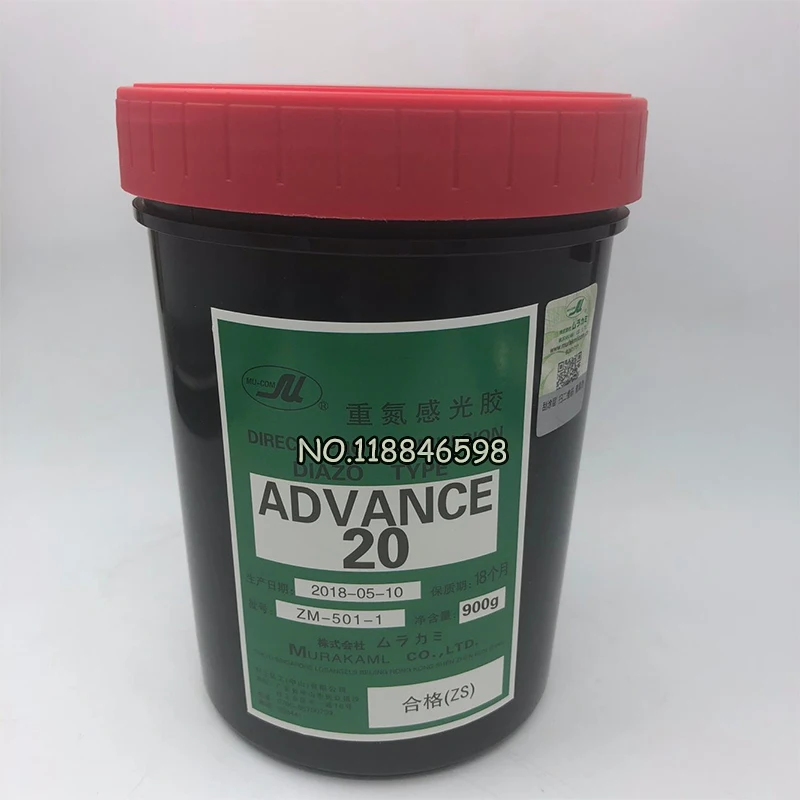
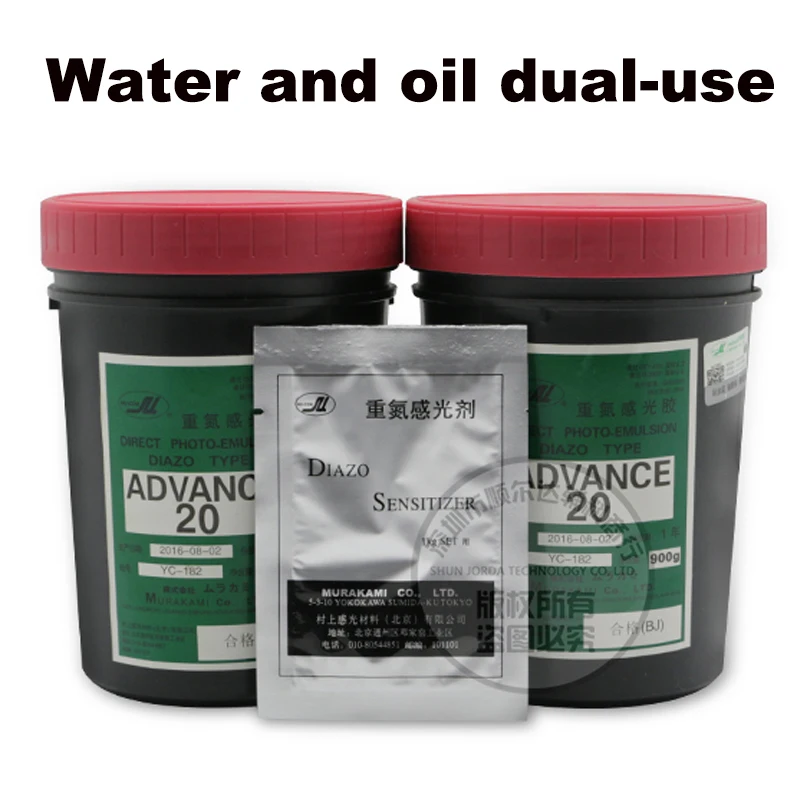
1kg Screen Printing High-Plate Water and Oil Dual Purpose Haruki Photosensitive for Making Plateboard


1kg Screen Printing High-Plate Water and Oil Dual Purpose Haruki Photosensitive for Making Plateboard
Description
SPECIFICATIONS
Brand Name: SPExpressDIY
High-concerned chemical: None
Material: Carbide
Model Number: DJ-D20
Origin: Mainland China
Type: Hand Tool Parts
Use: Commercial Manufacture
is_customized: No
Water and Oil Dual Photosensitive Ink
Note:We specialize in export packaging before shipment, but liquids are still liable to leak in long transportation. So if you are perfectionist buyer,do not buy it.
1. preparation of photosensitive adhesive:
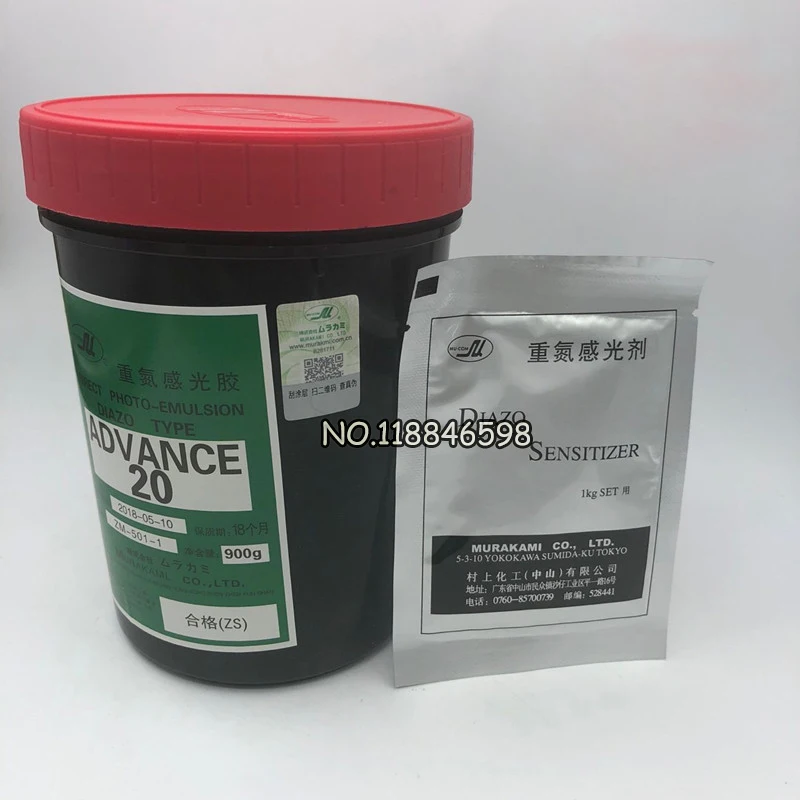
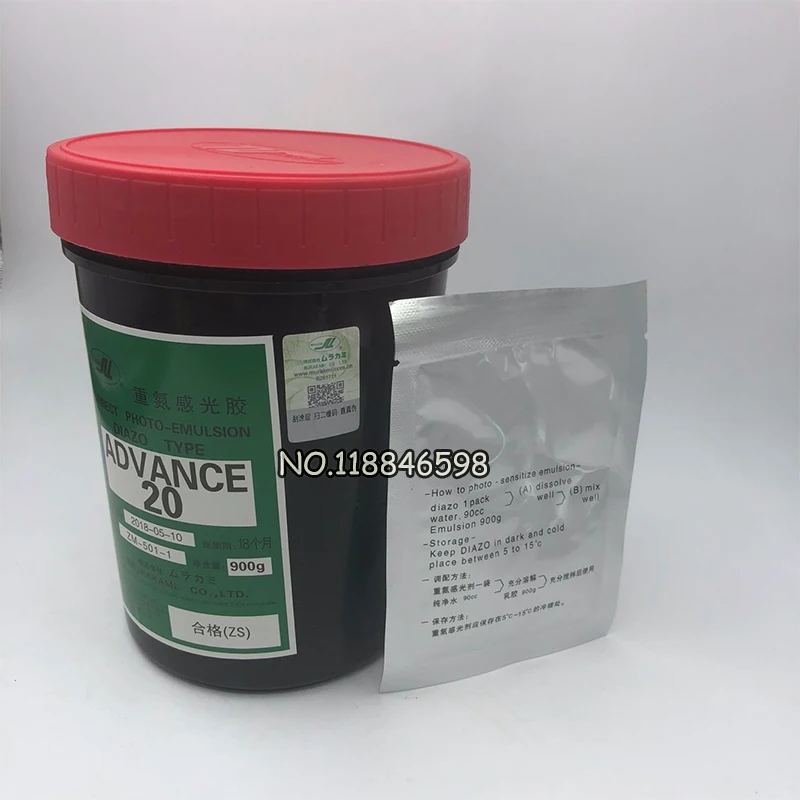
Operated under a yellow light, the photosensitizer is fully dissolved in 50 ml distilled water or clear water, added to the glue and stirred evenly, then left to rest until the bubbles disappear. (usually matched every other day) do not use metal products to prepare tools, in order to avoid affecting stability, the photosensitive adhesive should be stored in low temperature and light-proof, storage temperature: 5-25 degrees centigrade.
2. screen processing:
Degreasing and decontaminating the stretched screen plate with weak alkaline aqueous solution (such as: screen cleaning agent, grinding paste, degreasing agent, detergent, etc., due to different varieties, the effect is also different). Wash it. After drying, you can glue.
3. glue on screen:
Yellow light operation, using a scraper gluing, generally gluing the front and back twice, the first coated page can be on the second time without sticking hands, drying speed should not be too fast, drying temperature should be controlled below 35 degrees Celsius, drying with electric hair dryer or oven, after thorough drying can be exposed.
4. exposure:
Operating under yellow light, the screen plate and film are sequentially exposed on the exposure box. The light source and exposure time are used to refer to the following table:
Light source power (W) distance (M) exposure time (sub)
Metal halogen lamp (iodine gallium lamp) 30000.80 1-1.5
Diazonium lamp (fluorescent lamp type) 2000.30 2-5
Ordinary fluorescent lamps 400-800 0.30 6-10
5. development:
Immerse the exposed screen in water for 1-2 minutes (avoid light). Rinse the unexposed part with strong water pressure and fine water flow. The water pressure depends on the degree of exposure and the precision of the pattern. It is better to develop the screen with foggy water flow. Rinse tank to avoid direct sunlight.
6. revision:
It can be used for repairing sand holes and other unwanted parts by using photosensitive glue or sealing mesh adhesive.
7. hardening treatment:
In order to solidify the film and improve the printing resistance, the film can be hardened by direct sunlight exposure for 1-2 hours or by re-exposure for 10 minutes. It can also increase the printing resistance rate by adding hardener, but the screen is not easy to remove.
8. screen stripping and reuse:
Wash the printing material on the printing plate, then dip it in the film solution with gauze or sponge, evenly smear it on both sides of the printing plate, wait for about 3 minutes, then repeatedly smear the film solution, and finally rub it with gauze or sponge to remove the film. After removing film, screen printing is clean and reusable. (Screen plate can not be washed out of stains and ghosts, you can use ghost paste to reduce the extent of ghosts).
Care
To maintain the beauty and integrity of your purchase, we recommend treating it with care. Simple maintenance practices, such as gentle washing and proper storage, can effectively preserve the longevity of your favorites. We encourage you to refer to the care instructions included with each item, designed to help you keep your purchase in top condition.
Design
Our dedication to excellence extends beyond materials; it encompasses the artistry and craftsmanship illustrated in every piece we create.